The Style
"A shotgun wedding between Bauhaus and Fisher-Price."
Core Principles
Radical Color
Memphis rejected the muted, neutral palettes of modernism in favor of explosive, clashing colors. Hot pinks, electric blues, sunny yellows, and vibrant teals collided in ways that were deliberately jarring and joyful. Color wasn't just decorative—it was rebellious.
Geometric Shapes
Circles, triangles, squiggles, and zigzags became the visual vocabulary of Memphis. These shapes were often arbitrary and non-functional, added purely for aesthetic impact. The geometry was playful, abstract, and unapologetically decorative.
"Cheap" Materials
Memphis embraced plastic laminates, terrazzo, and mass-produced materials that modernists had scorned. They celebrated the artificial and the synthetic, finding beauty in what had been considered low-brow or kitsch. This was design for the real world, not the elite.
Bold Patterns
Stripes, dots, squiggles, and abstract motifs covered every surface. Patterns weren't meant to harmonize—they clashed, overlapped, and competed for attention. The result was visually chaotic but undeniably energetic and alive.
Iconic Works
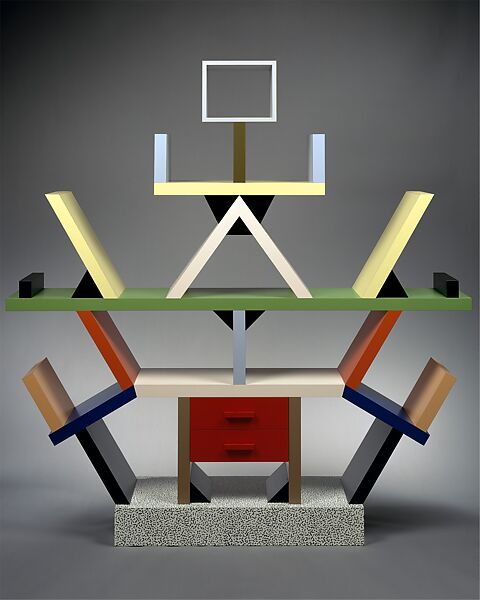
Carlton
Room Divider by Ettore Sottsass, 1981
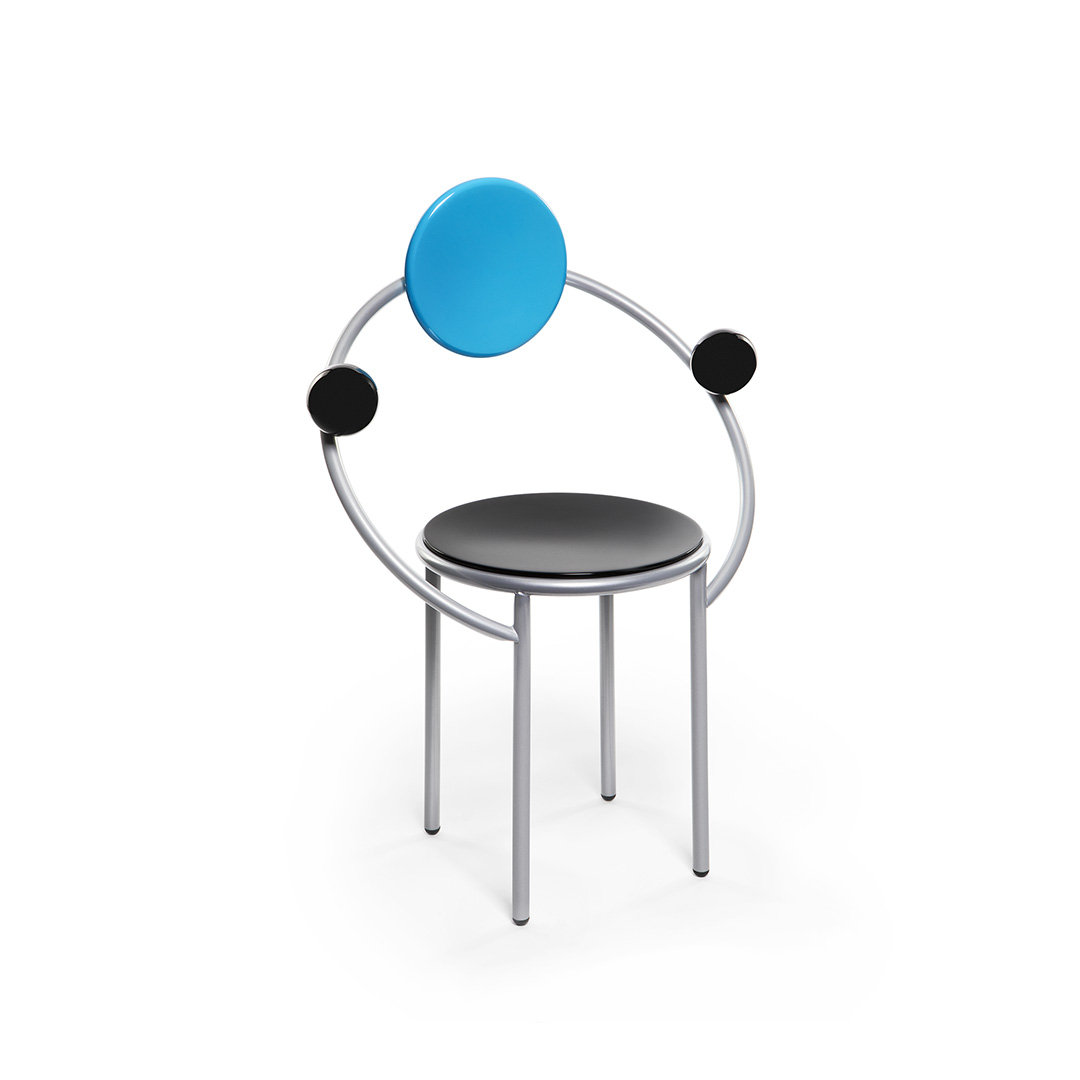
First
Chair by Michele De Lucchi, 1983
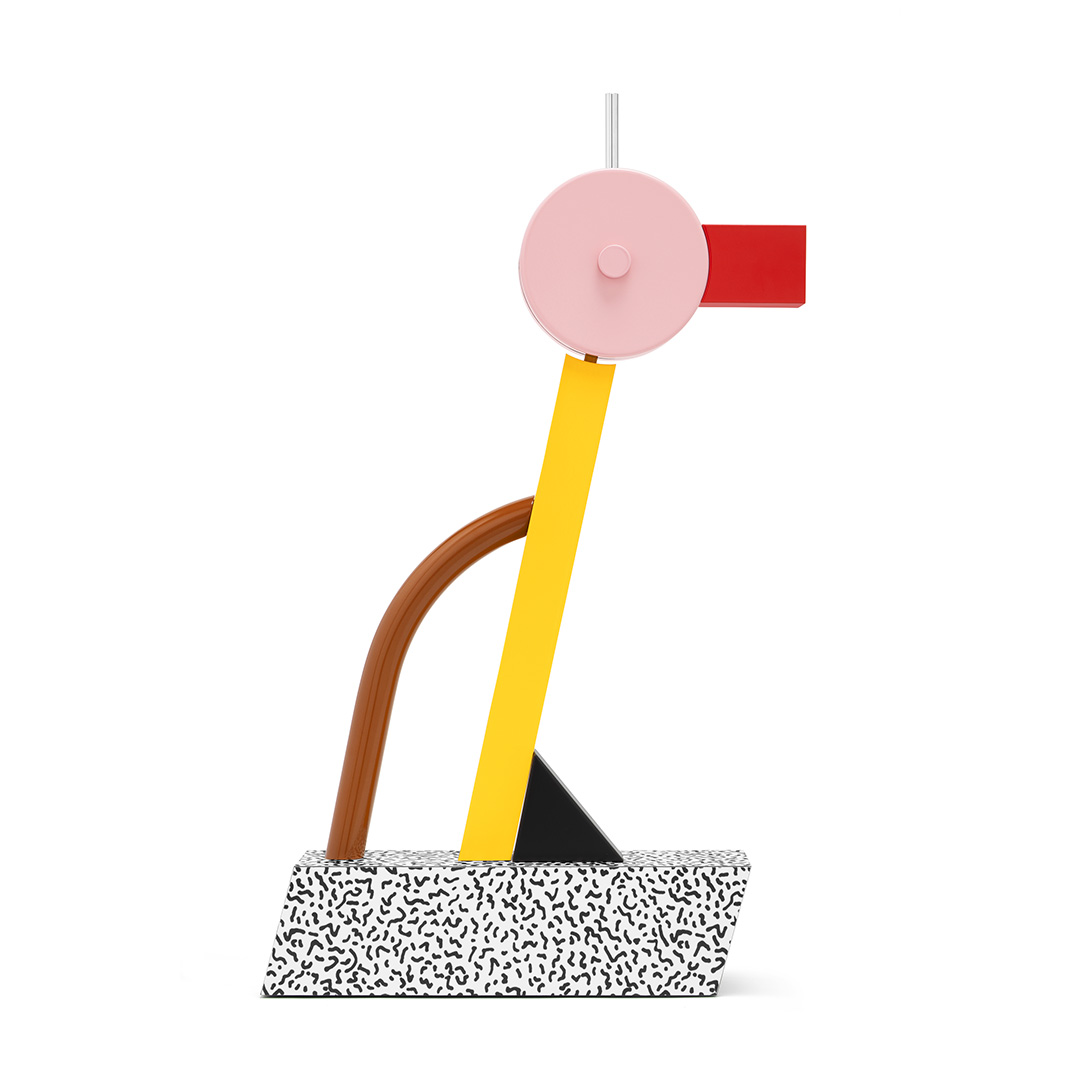
Tahiti
Lamp by Ettore Sottsass, 1981